
Allergies in Cats
Cats can be mysterious when it comes to their health, and one of the most puzzling issues pet owners often face is allergies in cats. Sneezing, itching, or digestive troubles may not seem like much at first, but when these symptoms linger or worsen, it leaves many cat owners searching for answers. Allergies in cats can affect their comfort and behavior in surprising ways, and understanding what may trigger them helps you know when to seek veterinary guidance. If you’ve ever wondered why your cat is scratching, sneezing, or overgrooming, this blog will help you learn more about common allergy causes, symptoms, and treatment options available through your veterinarian.
What Are Allergies in Cats?
Allergies in cats occur when the immune system reacts abnormally to a substance it considers harmful, even if it isn’t. This reaction can cause skin irritation, respiratory issues, or gastrointestinal upset. While any cat can develop allergies, some breeds may be more sensitive, and allergies can develop at any age.
There are three main categories of allergies in cats: environmental, food-related, and flea allergies. Each presents differently, but the end result is often the same: an uncomfortable cat in need of relief. Because cats can hide discomfort well, pet owners might only notice subtle changes such as excessive grooming or hiding more than usual. Recognizing these changes early allows your veterinarian to evaluate possible causes before symptoms progress.
Common Causes of Allergies in Cats
Pinpointing what triggers allergies in cats isn’t always easy. Since reactions can stem from multiple sources, veterinarians often take a step-by-step approach to rule out potential culprits.
Environmental Allergies
Environmental allergens, also known as atopic dermatitis, are among the most common causes. These include pollen, dust mites, mold spores, and even household cleaning products. Cats with environmental allergies may experience flare-ups during certain seasons, much like people with hay fever.
Food Allergies
Food allergies in cats usually stem from proteins such as chicken, beef, or fish, though some cats may react to dairy or grains. These allergies often present as chronic skin irritation, ear infections, or digestive upset rather than sudden, severe reactions.
Flea Allergies
A single flea bite can cause a major reaction in a sensitive cat. Flea allergy dermatitis leads to severe itching, scabs, and hair loss, usually concentrated around the base of the tail and lower back. Even indoor cats can develop flea allergies if a flea is carried in from outside.
Symptoms of Allergies in Cats
Symptoms vary depending on the allergen, but most cats with allergies display some combination of skin, respiratory, or digestive signs.
Skin-Related Symptoms
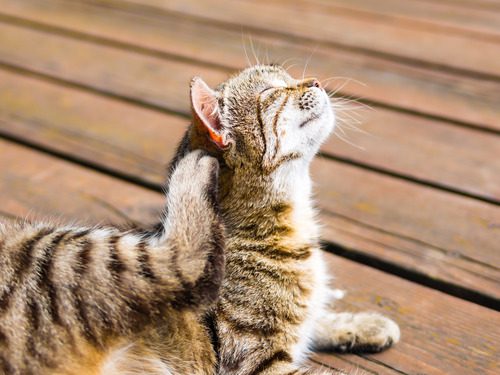
The most noticeable signs are often on the skin. Cats may excessively scratch, lick, or groom themselves, sometimes to the point of creating bald spots or wounds. Redness, bumps, or scabs may also appear, particularly around the neck, face, or belly.
Respiratory Symptoms
Cats with environmental allergies may sneeze frequently, cough, or have watery eyes. Some cats develop asthma-like symptoms, which require veterinary attention.
Digestive Symptoms
Food allergies in cats often cause vomiting, diarrhea, weight loss, or changes in appetite. Chronic digestive upset may indicate a reaction to something in their diet. Since these symptoms can overlap with other medical conditions, a thorough veterinary exam is the best way to determine if allergies are the cause.
Diagnosing Allergies in Cats
Diagnosing allergies in cats takes patience and a systematic approach. Your veterinarian may begin by reviewing your cat’s health history and performing a physical exam. Depending on the symptoms, further steps may include:
- Skin testing or blood testing for environmental allergies.
- Elimination diets to identify food triggers.
- Flea comb checks or trial flea prevention if flea allergies are suspected.
Because symptoms of allergies in cats mimic other issues such as skin infections or parasites, it’s important to have your cat evaluated by your veterinarian before assuming allergies are the cause.
How Are Allergies in Cats Addressed?
Once a diagnosis is made, treatment focuses on managing symptoms and reducing exposure to the allergen.
Environmental Allergy Management
Veterinarians will recommend a full blood panel and imaging to rule out anything metabolic disguising itself as allergies. A blood test can also serve as an allergy test for your pet. Your vet may recommend medications to reduce itching and inflammation, or allergy injections to help cats build tolerance. Air filters, frequent vacuuming, and reducing exposure to strong cleaning agents can also help minimize triggers.
Food Allergy Management
The most effective treatment for food allergies in cats is identifying and removing the offending ingredient. Prescription diets or carefully monitored elimination trials help pinpoint the problem. Once identified, avoiding that ingredient prevents flare-ups.
Flea Allergy Management
Strict flea control is key. Your veterinarian will recommend safe and effective flea prevention products to protect your cat from bites that could cause intense reactions.
In some cases, a combination of treatments may be needed to fully manage allergies in cats. Regular checkups help adjust the plan as your cat’s needs change.
Can Allergies in Cats Be Prevented?
While allergies in cats cannot always be prevented, proactive care reduces flare-ups. Regular veterinary visits allow for early detection, and maintaining flea control year-round prevents flea allergy dermatitis. Monitoring your cat’s environment and diet also helps minimize exposure to common allergens. Allergies cannot be cured, but our team at Lane Veterinary can help control clinical signs of allergies with a diagnosis and treatment plan tailored to your cat’s needs.
When to Contact Lane Veterinary
If your cat is scratching nonstop, experiencing digestive upset, or showing changes in breathing, allergies may be to blame. Even mild signs should not be ignored, as they can worsen over time. At Lane Veterinary in Hinsdale, IL, our team provides the care and diagnostic support needed to help cats with allergies live comfortably. Call us today at (630) 320-6644 or book an appointment online to schedule an allergy evaluation for your cat. By addressing allergies in cats early, you give your pet the chance to feel better and enjoy life without constant discomfort.
Recent Posts
About Us
Choosing a vet means entrusting your pet’s care and well-being to capable hands. Lane Veterinary strives to be a lifetime vet for you and your family, being the people you can always lean on for support and guidance. As a privately owned practice, we stand to give people and their pets the one-on-one care and attention they deserve in a calm and comfortable setting.