
Why Is My Dog Licking His Paws?
You’ve noticed your dog licking his paws again. Maybe it’s a quick grooming session, or maybe it’s been going on for hours and you’re starting to wonder if something is wrong. Dogs lick their paws for many reasons and while occasional licking is completely normal, persistent or excessive paw licking is almost always a sign that something is bothering your dog. Allergies, infections, injuries, anxiety, and environmental irritants can all be root causes, and telling them apart matters because each one requires a different approach. If your dog has been focused on his paws more than usual, this guide will walk you through everything you need to know: what’s driving the behavior, what warning signs to watch for, and when a trip to Lane Veterinary is the right call.
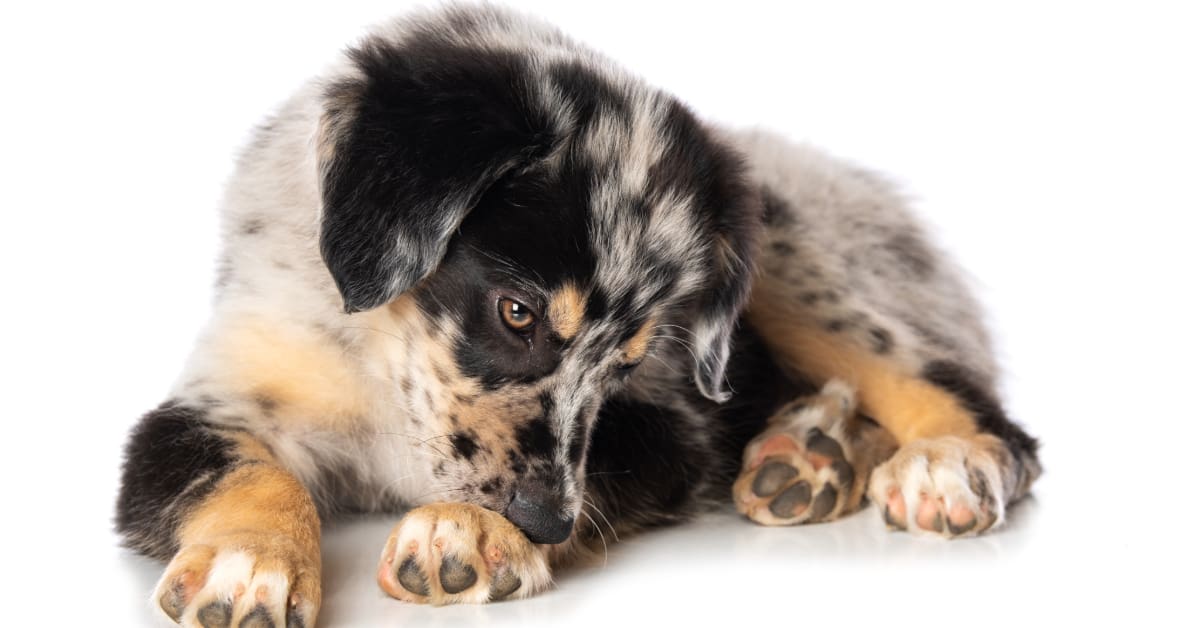
Why Do Dogs Lick Their Paws?
Dogs lick their paws for a variety of reasons. Some are harmless; others require veterinary attention. The key is in the pattern: occasional, brief licking is generally normal grooming behavior. Persistent, repetitive paw licking, especially if it’s focused on one paw or causing discoloration, swelling, or hair loss, is a sign worth investigating.
Normal Grooming
Just like cats, dogs groom themselves by licking. After a walk or outdoor play, it’s completely normal for a dog to lick his paws to clean them. This type of licking is brief and doesn’t leave the skin looking irritated or red.
Allergies
If your dog licks his paws obsessively, allergies are the most likely culprit. Dogs can develop allergies to environmental allergens like pollen, mold, and dust mites, as well as food ingredients. Paw licking is a classic symptom of canine atopic dermatitis (environmental allergies). Seasonal patterns such as licking that gets worse in spring or fall are a strong indicator that allergens may be involved.
Food allergies can also cause paw licking. Common dietary triggers in dogs include beef, chicken, dairy, wheat, and soy. If your dog licks his paws year-round without a seasonal pattern, food allergy is worth discussing with our veterinary team at Lane Veterinary.
Contact Dermatitis and Irritants
Dogs walk on surfaces we treat with chemicals every day: lawn pesticides, sidewalk salt in winter, cleaning products on floors. Contact dermatitis occurs when the paws are irritated by direct exposure to these substances. Your dog licking his paws after a walk could be a response to something he stepped in. This is an especially important consideration for dog owners in Hinsdale and Elmhurst, where road salt and lawn treatments are common seasonally.
Gastrointestinal Upset
It may come as a surprise, but an unsettled stomach can actually cause a dog to lick his paws. Dogs experiencing nausea, acid reflux, or other GI discomfort sometimes redirect that unease into repetitive licking behaviors and the paws are a common target. If your dog’s paw licking seems to intensify around mealtimes or is accompanied by other digestive symptoms like vomiting, diarrhea, or loss of appetite, a gastrointestinal issue may be contributing. Our team at Lane Veterinary can help determine whether your dog’s paw licking and digestive health are connected.
Behavioral Causes and Boredom
Sometimes paw licking has less to do with physical discomfort and more to do with a dog’s emotional or mental state. Dogs who are under-stimulated, bored, or experiencing stress may turn to repetitive paw licking as a self-soothing outlet. This type of licking often develops gradually into a habit and can be difficult to distinguish from medically driven licking without a veterinary evaluation. If your dog licks his paws most often during periods of inactivity or when left alone, behavioral causes are worth discussing with your veterinarian at Lane Veterinary.
Why Is My Dog Licking His Paws So Much?
When paw licking becomes excessive including constant or prolonged sessions that leave the paw looking red, swollen, or discolored, it’s time to look deeper. Excessive paw licking in dogs can result from several underlying conditions:
- Yeast or bacterial infections: Moist environments between the toes are perfect for yeast overgrowth and bacterial infections. You may notice a reddish-brown staining of the fur (from saliva) and a distinct odor.
- Parasites: Fleas, ticks, or mites can cause intense itching and paw licking. Even one flea can trigger a significant reaction in an allergic dog.
- Injury or foreign body: A thorn, splinter, pebble, or small cut can cause a dog to focus licking on one specific paw.
- Anxiety or compulsive behavior: Some dogs develop paw licking as a stress response or compulsive habit, particularly in dogs prone to separation anxiety.
What Does It Mean When a Dog Licks His Paws Between the Toes?
Licking focused between the toes, especially if accompanied by redness, swelling, or a corn-chip-like odor, is a strong indicator of a yeast infection. Malassezia, the yeast that commonly affects dogs, thrives in the warm, moist folds between a dog’s toes. This condition is often secondary to allergies; the chronic moisture from licking creates the perfect environment for yeast to proliferate.
Interdigital cysts (small, painful lumps between the toes) are another possibility. These can develop from ingrown hairs, trauma, or recurring infections. If you see swelling or bumps between your dog’s toes, Lane Veterinary can evaluate and treat the area appropriately.
Signs That Dog Paw Licking Needs a Vet Visit
Not every instance of paw licking requires a trip to the vet, but there are clear signals that your dog needs professional care. Contact Lane Veterinary if you notice:
- Redness, swelling, or discharge from the paw or between the toes
- Hair loss or skin changes on the paws
- A strong or unusual odor coming from the paws
- Your dog limping or favoring a paw
- Licking that is constant, waking your dog from sleep, or causing open sores
- Visible injuries, cuts, swelling, or foreign objects in the paw
Can Anxiety Cause a Dog to Lick His Paws?
Yes, anxiety is a real and underrecognized cause of paw licking in dogs. Behavioral paw licking is often repetitive and may increase during stressful events like thunderstorms, fireworks, travel, or schedule changes. Some dogs develop what veterinarians describe as an acral lick dermatitis, which is a thickened, raw spot on the paw from chronic licking that began as a behavioral response.
If you suspect anxiety is driving your dog’s paw licking, our veterinary team at Lane Veterinary can discuss behavior-based approaches alongside any medical treatment that may be needed. Addressing both the physical and emotional components of the behavior leads to the best outcomes.
How Vets Diagnose the Cause of Paw Licking in Dogs
When you bring your dog to Lane Veterinary for paw licking, your veterinarian will conduct a thorough examination of the paws and skin, review your dog’s history and environment, and may recommend additional diagnostics. Depending on the suspected cause, this might include:
- Skin cytology to check for yeast or bacteria
- Allergy testing or an elimination diet trial
- Parasite screening
- Radiographs if a bone or joint issue is suspected
Getting to the root cause is essential for effective treatment. Managing the symptoms without addressing the underlying condition often leads to chronic, recurring problems.
Caring for Your Dog’s Paw Health in Hinsdale and Elmhurst
At Lane Veterinary, our veterinarians are experienced in diagnosing and treating the full range of conditions that cause dogs to lick their paws. Whether the issue is allergic, infectious, structural, or behavioral, we take a thorough, individualized approach to your dog’s care.
We serve pet owners throughout Hinsdale, Elmhurst, and the surrounding western Chicago suburbs. If your dog has been licking his paws excessively, we encourage you to schedule an appointment so we can identify what’s going on and put a treatment plan in place.
What Your Dog’s Paws Are Trying to Tell You
Dogs can’t tell you when something hurts or itches, they show you. Persistent paw licking is your dog’s way of communicating that something doesn’t feel right, and paying attention to that signal is one of the most important things you can do as a pet owner. When you know why your dog licks his paws, you can act quickly and give him the relief he needs. Call Lane Veterinary in Hinsdale or Elmhurst, IL at (630) 320-6644 or book an appointment online. We’re here to help your dog feel his best.
Recent Posts
About Us
Choosing a vet means entrusting your pet’s care and well-being to capable hands. Lane Veterinary strives to be a lifetime vet for you and your family, being the people you can always lean on for support and guidance. As a privately owned practice, we stand to give people and their pets the one-on-one care and attention they deserve in a calm and comfortable setting.