Why Is My Dog Eating Grass?
Dogs eat grass for a variety of reasons and while it’s a common behavior, our team at Lane Veterinary encourages owners not to dismiss it without a second thought. It can be a response to nutritional deficiencies, gastrointestinal discomfort, or an underlying health issue that deserves a closer look. Rather than assuming it’s just something dogs do, bringing it up with your veterinarian is always a smart move. Read on to learn what may be driving your dog to graze, why B12 deficiency is part of the conversation, and how to recognize the signs that mean it’s time to call your vet.
Why Do Dogs Eat Grass?
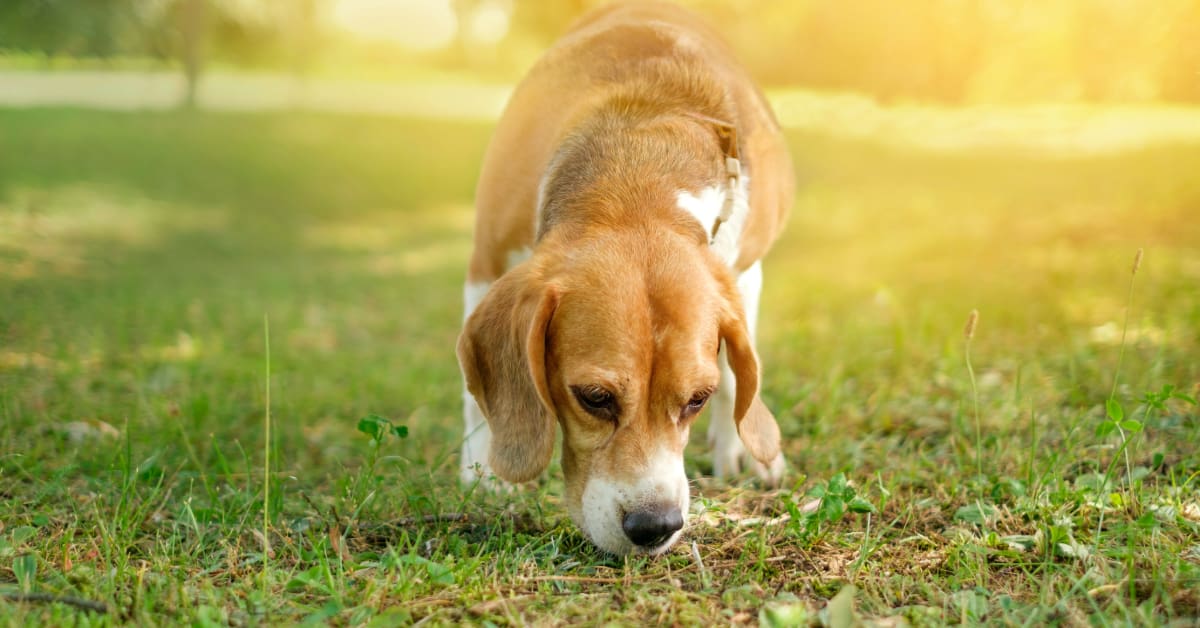
There’s no single explanation for why dogs eat grass, and that’s exactly why our team at Lane Veterinary finds it worth discussing with pet owners rather than dismissing outright. Dogs are omnivores with complex dietary and behavioral needs, and grass eating can be the body’s way of signaling that something is off, or it can be a response to boredom, instinct, or mild gastrointestinal discomfort. The challenge is that without a veterinary conversation, it’s difficult to know which one you’re dealing with.
Vitamin B12 Deficiency
One of the factors our veterinary team at Lane Veterinary considers when a dog is eating grass regularly is vitamin B12 status. B12 (also known as cobalamin) plays a critical role in a dog’s neurological function, red blood cell production, and gastrointestinal health. When B12 levels are low, the GI tract is often one of the first places it shows up. Dogs with B12 deficiency can experience chronic digestive issues that may drive them to seek out grass as a response to ongoing GI discomfort.
B12 deficiency in dogs is more common than many owners realize and can stem from inadequate dietary intake, poor absorption due to underlying GI disease, or conditions affecting the small intestine where B12 is absorbed. Certain breeds are also genetically predisposed to B12 absorption issues. If your dog is a frequent grass eater and also shows signs of digestive upset, weight loss, or low energy, B12 levels are something your veterinarian at Lane Veterinary may want to evaluate.
A Note on Folic Acid
While folic acid, which is another B vitamin found in plant material, is sometimes discussed in the context of grass eating, the relationship is more nuanced than it might seem. Both abnormally high and abnormally low folic acid levels can contribute to gastrointestinal signs in dogs, which means that grass eating driven by folic acid imbalance isn’t as straightforward as a simple deficiency. Rather than assuming grass eating signals a folic acid shortage, it’s a better reason to have your dog’s overall nutritional status evaluated by your veterinarian who can look at the complete picture.
Gastrointestinal Discomfort
Some dogs eat grass in response to an unsettled stomach. While the popular theory that dogs graze specifically to induce vomiting is only partially supported by research, dogs with underlying digestive issues such as acid reflux, inflammatory bowel disease, chronic nausea, or GI conditions linked to B12 deficiency may turn to grass as a coping behavior. If your dog eats grass urgently or in large amounts and frequently vomits afterward, a gastrointestinal issue deserves veterinary investigation rather than a wait-and-see approach.
Behavioral Reasons
Dogs may also eat grass out of boredom, habit, or simple enjoyment. Some dogs develop a pattern of grazing during outdoor time that has no underlying medical cause. That said, even behavioral grass eating is worth mentioning to your veterinarian, because ruling out a physical cause first is always the right approach.
Why Lane Veterinary Encourages You to Bring It Up
Our team at Lane Veterinary takes the position that grass eating in dogs is a behavior worth discussing, not something to automatically normalize. Pets can’t tell us when they’re not feeling their best, and behavioral cues like grass eating are sometimes the only early signal that something is off nutritionally or physically. A dog eating grass regularly could be managing undiagnosed B12 deficiency, a GI condition, or another underlying issue that a wellness visit and simple bloodwork could identify. Pet owners in Hinsdale and Elmhurst who mention this behavior at wellness visits give their veterinarian a valuable piece of information that can inform a more complete picture of their dog’s health.
When Should You Be Concerned About a Dog Eating Grass?
There are times when grass eating warrants more than a conversation at a routine visit. Contact Lane Veterinary sooner if you notice:
- Frequent or compulsive grass eating that has recently increased
- Vomiting repeatedly after eating grass
- Diarrhea, lethargy, or loss of appetite
- Weight loss or changes in stool
- Low energy or exercise intolerance alongside grass eating
- Signs of abdominal discomfort, such as whining, bloating, or reluctance to move
These signs alongside grass eating suggest an underlying issue that should be evaluated promptly rather than monitored at home.
Is Grass Safe for Dogs to Eat?
Plain, untreated grass is not inherently harmful, but what’s on the grass often is. Lawns treated with herbicides, pesticides, and fertilizers pose a real risk to dogs who graze. Even products labeled “pet-safe” should be fully dry before your dog has access to a treated lawn. Dogs who eat grass in parks or shared green spaces may also be exposed to intestinal parasites. Keeping your dog on a year-round parasite prevention protocol, something the team at Lane Veterinary can help you establish, is an important safeguard.
Why Is My Dog Eating Grass and Then Throwing Up?
If your dog eats grass and vomits regularly, that pattern deserves veterinary attention. Occasional vomiting after grazing may be incidental, but a recurring cycle can indicate an ongoing gastrointestinal problem that grass eating is masking rather than solving. Conditions linked to B12 deficiency, inflammatory bowel disease, acid reflux, or dietary intolerances. Our veterinarians at Lane Veterinary in Hinsdale and Elmhurst can help identify what’s driving the behavior and recommend appropriate next steps, which may include B12 testing as part of a broader nutritional workup.
What Your Veterinarian Will Consider
When you bring up grass eating at Lane Veterinary, your veterinarian will consider a range of possible contributing factors, which may include:
- Vitamin B12 levels and overall cobalamin status
- Folic acid balance and its potential role in GI signs
- Pancreatic function, which is assessed as part of a full GI panel alongside B vitamin levels
- Gastrointestinal health and any history of digestive issues
- Behavioral patterns and environmental factors
- Parasite exposure and prevention history
Getting a complete picture helps your veterinarian give you guidance that’s specific to your dog, not just a general reassurance that grazing is normal.
Nutritional and Wellness Support at Lane Veterinary
At Lane Veterinary, we believe that small behavioral changes in your pet are worth taking seriously. Our veterinary team serves pet owners throughout Hinsdale, Elmhurst, and the surrounding western Chicago suburbs with thorough, individualized care. Whether your dog’s grass eating turns out to be a B12 deficiency, a digestive concern, or a habit worth addressing, we’re here to help you find answers. Contact Lane Veterinary today to schedule a wellness visit and bring up anything you’ve noticed about your dog’s behavior, grass eating included.
What Your Dog’s Grass Habit Might Really Be Telling You
Grass eating may seem like a minor quirk, but it’s the kind of behavior that deserves a closer look rather than a quick dismissal. From potential B12 deficiency and GI disease to folic acid imbalance and behavioral factors, there’s often more to the story than instinct alone. Paying attention and talking to your vet about what you’ve observed is one of the simplest and most effective things you can do for your dog’s long-term health. Our team at Lane Veterinary in Hinsdale and Elmhurst, IL is always here to listen, investigate, and help. Call us at (630) 320-6644 or book an appointment online.
Recent Posts
About Us
Choosing a vet means entrusting your pet’s care and well-being to capable hands. Lane Veterinary strives to be a lifetime vet for you and your family, being the people you can always lean on for support and guidance. As a privately owned practice, we stand to give people and their pets the one-on-one care and attention they deserve in a calm and comfortable setting.