
Why Do Dogs Get Eye Boogers?
Why do dogs get eye boogers? Dogs get eye boogers because their eyes constantly produce tears and mucus to trap dust, debris, and dead cells, and that material dries in the corners of the eyes, especially overnight. A small amount of clear or light brown crust is completely normal. However, thick yellow or green discharge, excessive goop, or eye boogers paired with squinting or redness can signal an infection, allergies, dry eye, or another condition that needs veterinary attention. If you’ve ever wiped a bit of gunk from your pup’s eyes in the morning and wondered whether it was something to worry about, you’re asking a smart question. At Lane Veterinary in Hinsdale and Elmhurst, IL, our team regularly helps pet owners figure out which kind of eye discharge is routine and which deserves a closer look. In this guide, we’ll explain the everyday reasons for eye boogers, what different colors and textures can mean, the medical conditions behind abnormal discharge, and when to schedule an exam.
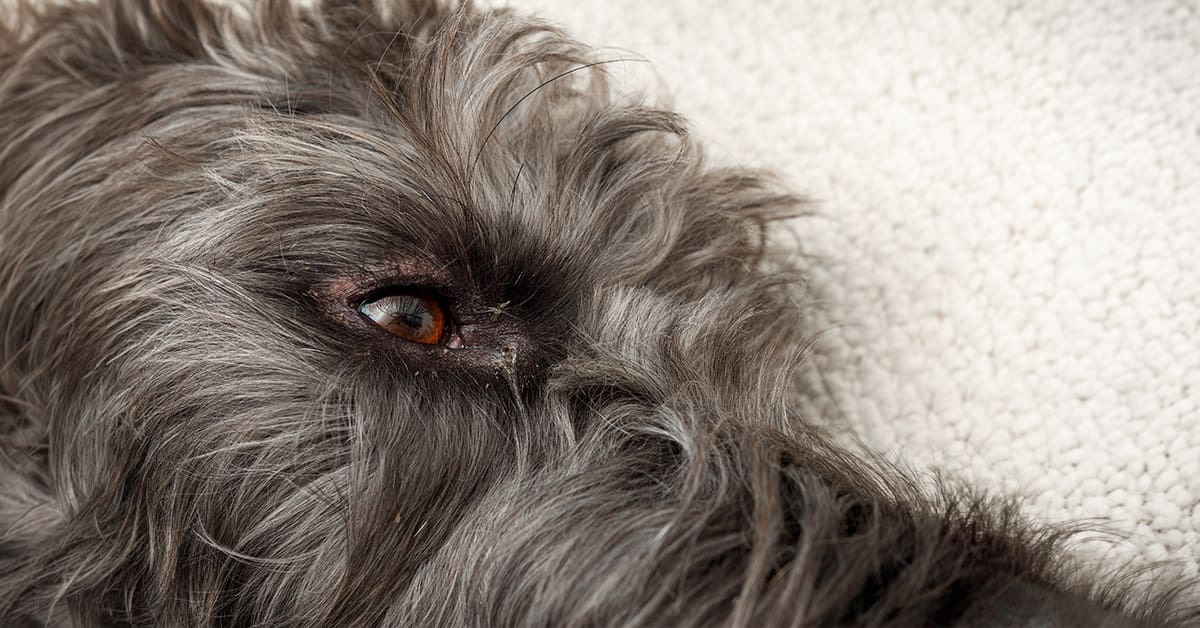
Why Do Dogs Get Eye Boogers? The Everyday Explanation
The simplest answer to “why do dogs get eye boogers?” starts with biology. Your dog’s eyes have a built-in cleaning system that works around the clock. Understanding how it functions makes it much easier to recognize when something has gone wrong.
How the Tear Film Protects the Eye
Every time your dog blinks, a thin layer called the tear film spreads across the surface of the eye. This film is made of water, oils, and mucus that work together to keep the eye moist, nourished, and protected. As the tear film catches dust, pollen, and old cells, it moves toward the inner corner of the eye and drains through tiny ducts into the nose. Whatever doesn’t drain away collects in the corner and dries. That dried material is what most people call eye boogers, and veterinarians refer to it as ocular discharge.
Why You Notice It More in the Morning
During sleep, your dog blinks far less often, so mucus and debris have more time to settle and harden. That’s why many owners spot crusty corners first thing in the morning. A small amount that’s easy to see and doesn’t come back heavier throughout the day is generally considered normal. Many owners first search “why do dogs get eye boogers?” after noticing these morning crusts, and in healthy dogs, nighttime buildup is usually the whole explanation.
Breeds That Get More Eye Gunk
Some dogs naturally produce more visible discharge than others. Flat-faced breeds like Pugs, Shih Tzus, Boston Terriers, and French Bulldogs have prominent eyes and shallow eye sockets, which expose more of the eye’s surface. Small white or light-coated dogs, such as Maltese and Bichon Frises, often show reddish-brown tear staining that makes discharge more noticeable. For these breeds, the answer to “why do dogs get eye boogers?” often includes anatomy, not just routine cleaning.
What Different Types of Eye Discharge Can Mean
Part of answering “why do dogs get eye boogers?” is looking closely at what you’re wiping away. The color, texture, and amount of your dog’s eye discharge offer valuable clues. While only a veterinarian can diagnose the cause, knowing what’s typical helps you decide when to call.
Reading the Signs
Here’s a general guide to what veterinarians often associate with different types of discharge:
- Clear and watery: Often linked to allergies, irritants like smoke or dust, a blocked tear duct, or a foreign object in the eye
- Light brown or rust-colored crust: Usually normal dried tears, especially in the morning
- Reddish-brown staining on the fur: Caused by pigments in tears called porphyrins, common in light-coated breeds
- White or gray mucus: Can point to dry eye, also called keratoconjunctivitis sicca
- Yellow or green discharge: Frequently associated with a bacterial infection
Amount and Pattern Matter Too
A sudden increase in discharge, discharge from only one eye, or goop that returns within an hour of being wiped away all suggest something more than normal tear production. One-sided problems in particular may point to an injury, foreign body, or blocked duct on that side. If you’ve been asking yourself “why do dogs get eye boogers?” and your dog’s seem to be multiplying, a change in pattern is your cue to reach out to your veterinary team.
Medical Conditions Behind Abnormal Eye Boogers
When discharge becomes heavy, discolored, or persistent, the question “why do dogs get eye boogers?” shifts from curiosity to a health concern. In these cases, an underlying condition is often involved. Several common eye problems in dogs produce extra eye boogers as one of their first signs.
Conjunctivitis
Conjunctivitis, sometimes called pink eye, is inflammation of the tissue lining the eyelids and the white of the eye. It can result from allergies, bacteria, viruses, or irritants. Dogs with conjunctivitis often have red eyes, swelling, squinting, and discharge that ranges from watery to thick and yellow.
Dry Eye (KCS)
Dry eye happens when the eyes don’t produce enough of the watery part of tears. Without adequate moisture, the body compensates by producing thick, sticky mucus. Breeds like Cocker Spaniels, West Highland White Terriers, Shih Tzus, and English Bulldogs are predisposed. Untreated dry eye can lead to painful damage and vision loss over time, which is why early diagnosis matters.
Other Causes Worth Knowing
Several additional conditions can lead to abnormal discharge, including:
- Corneal ulcers or scratches from play, grooming, or plants
- Entropion, where the eyelid rolls inward and lashes rub the eye
- Cherry eye, a prolapsed gland in the third eyelid
- Blocked tear ducts that cause tears to overflow
- Seasonal or environmental allergies
- Glaucoma, a painful increase in pressure inside the eye
Because many of these conditions look similar at first, a professional exam is the most reliable way to answer “why do dogs get eye boogers?” for your individual pet.
When to See a Vet About Your Dog’s Eye Discharge
Not every case of “why do dogs get eye boogers?” calls for a clinic visit, but eye problems can worsen quickly, and some threaten vision within days. Knowing which signs deserve prompt attention protects your dog’s sight and comfort.
Symptoms That Shouldn’t Wait
Schedule a veterinary visit promptly if your dog has yellow or green discharge, squints or holds an eye closed, paws or rubs at the face, has a red or cloudy eye, or shows visible swelling around the eyelids. A sudden change in the eye’s appearance or any sign of pain should be treated as urgent. Avoid using human eye drops, contact lens solutions, or leftover medications from another pet. Some products can worsen certain conditions, such as corneal ulcers, and may delay proper treatment.
How Veterinarians Find the Cause
Your veterinarian will start with a careful look at the eyes, eyelids, and surrounding tissue. Common diagnostic tests include a Schirmer tear test to measure tear production, a fluorescein stain that highlights scratches or ulcers on the cornea, and eye pressure testing to check for glaucoma. If needed, your vet may take a sample of the discharge to identify bacteria or refer your dog to a veterinary ophthalmologist for advanced care.
Treatment Is Tailored to the Diagnosis
Once the cause is clear, your veterinarian will recommend a treatment plan specific to your dog. This may include prescription eye medications, allergy management, or, for structural problems like entropion or cherry eye, a surgical correction. Your vet can also show you the safest way to keep the area around your dog’s eyes clean if routine grooming is part of the plan.
Clear, Comfortable Eyes for Hinsdale and Elmhurst Dogs
So, why do dogs get eye boogers? In many cases, it’s simply the eye doing its job, collecting debris and washing it away. A little morning crust is no cause for alarm. Discharge that changes color, increases in amount, appears in only one eye, or comes with redness and squinting tells a different story and deserves professional attention. Paying attention to these details helps you catch eye problems early, when they’re often easiest to treat.
If you’ve noticed unusual eye discharge or simply want peace of mind, Lane Veterinary is here to help families throughout Hinsdale and Elmhurst, IL and the surrounding communities. Our team will examine your dog’s eyes thoroughly, explain what we find in plain language, and recommend the right next steps for your pet. Contact Lane Veterinary at (630) 320-6644 (Hinsdale) and (630) 478-0222 (Elmhurst) or book an appointment online today and help your dog see the world clearly and comfortably.
Recent Posts
About Us
Choosing a vet means entrusting your pet’s care and well-being to capable hands. Lane Veterinary strives to be a lifetime vet for you and your family, being the people you can always lean on for support and guidance. As a privately owned practice, we stand to give people and their pets the one-on-one care and attention they deserve in a calm and comfortable setting.