
Do Indoor Cats Need Rabies Shots?
So, do indoor cats need rabies shots? Yes. Illinois law requires them, and rabid bats have turned up inside Illinois homes, which means even a cat who never leaves the couch can be exposed. It’s an easy question to second-guess. Your cat naps in sunbeams, has never visited a dog park, and treats the front door as a mystery best solved from a safe distance. Why would rabies be a concern?
That reasoning sounds sensible, and plenty of loving cat owners share it, which is why the question deserves a straight answer. It comes down to a few surprising facts about wildlife, state law, and what happens when an unvaccinated pet is exposed. Below, Lane Veterinary in Hinsdale and Elmhurst, IL, explains each one in plain language, along with how often your cat needs a booster.
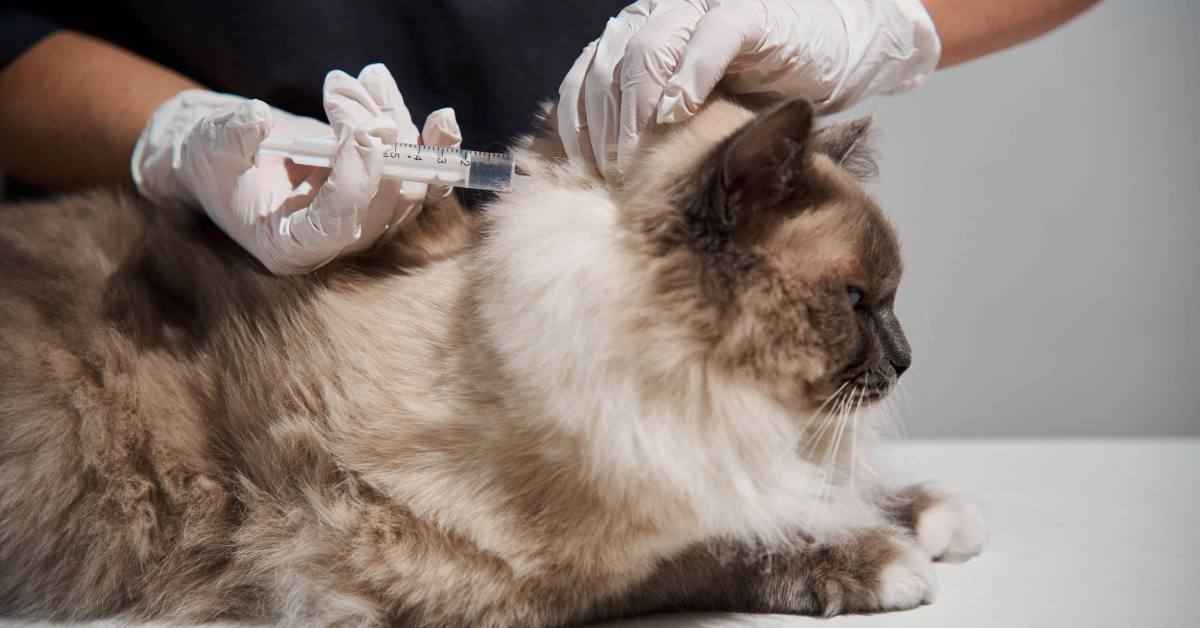
Do Indoor Cats Need Rabies Shots Under Illinois Law?
Yes, indoor cats need rabies shots under state law, and the reasons go well beyond the paperwork.
What Does Illinois Require?
The Illinois Animal Control Act requires owners of companion cats to have them vaccinated against rabies by a licensed veterinarian once they reach four months of age. A second vaccination must follow within one year of the first, and later doses follow the duration of immunity listed on the vaccine’s USDA license. Your veterinarian provides a vaccination certificate and sends a copy to the county, and some counties have their own registration requirements.
The law applies to companion cats, and that includes cats who live entirely indoors. A veterinarian can exempt a cat in writing if the vaccine would compromise its health, but an exempt cat that bites someone is treated as unvaccinated.
Can an Indoor Cat Really Be Exposed to Rabies?
It can happen. According to the Illinois Department of Public Health (IDPH), bats are the most common rabies carriers in the state, and rabid bats have been found inside homes, including in Cook and Will counties. Bats can slip in through attics, chimneys, and gaps around doors and windows, and a hunting-minded cat will investigate. A single bite or scratch is all it takes.
Bats are not the only concern. IDPH also names skunks, raccoons, foxes, and coyotes as high-risk animals. Common situations where an indoor cat may meet rabies risk include:
- A bat that finds its way into the attic, chimney, or living space
- A door or screen that opens just long enough for a cat to slip outside
- A window, porch, or catio where a curious cat can get close to passing wildlife
How Often Do Cats Need Rabies Shots?
Once you know that indoor cats do need rabies shots, the next question is timing. Most cats receive a first rabies shot as kittens, a booster one year later, and then boosters every one or three years, depending on the vaccine and your veterinarian’s recommendation. Here is how the rabies vaccine schedule for cats typically looks:
- Kittens: The first rabies vaccine usually comes around 12 weeks of age, and Illinois law requires vaccination once a cat reaches four months.
- One year later: A booster follows the first dose, whichever vaccine your veterinarian uses.
- Adult cats: Boosters continue on a one-year or three-year schedule, based on the vaccine and your veterinarian’s advice.
- Overdue cats: Veterinary guidelines recommend revaccinating as soon as possible.
Cats adopted as adults often arrive without a clear vaccination history. If you can’t find your cat’s records, tell your veterinarian. They can review what is on file, examine your cat, and recommend a plan that puts your cat on a schedule matching Illinois law.
What Is the Difference Between One-Year and Three-Year Rabies Vaccines?
Both options exist for cats. Either way, the first booster comes a year after the first dose. After your cat finishes that initial series, Lane Veterinary offers a three-year rabies vaccine, which spaces out boosters so your cat isn’t over-vaccinated. Your veterinarian will help you choose the right option for your cat’s age, health, and lifestyle.
What Happens if a Booster Is Late?
If your cat’s rabies vaccine has lapsed, schedule a visit soon. Veterinary guidelines call for revaccinating overdue cats as soon as possible, and local rules decide whether a late booster counts as continuous protection. A quick call to your veterinary team can clear up where your cat stands. Store the vaccination certificate somewhere easy to find, because boarding facilities, groomers, and new veterinary practices often ask for proof.
Why Does Rabies Protection Matter for Indoor Cats?
Rabies is a viral disease that attacks the nervous system, and once symptoms appear, it is almost always fatal. The short answer to whether indoor cats need rabies shots is yes because vaccination is the reliable way to protect both your cat and the people around them.
What Happens if an Unvaccinated Cat Is Exposed?
National guidelines treat exposure very differently depending on vaccination status. A cat with a current rabies vaccine typically receives a booster and then 45 days of observation under your care. For a cat that has never been vaccinated, the guidelines list euthanasia as the primary recommendation, with vaccination plus four months of strict quarantine as the alternative. Local health officials make the final call, and either path is hard on a family whose cat never set foot outdoors.
Do Indoor Cats Need Rabies Shots if Their Risk Is Already Low?
Yes, indoor cats do need rabies shots even if they rarely go outside because indoor life lowers your cat’s risk without erasing it. Rabies prevention works by covering the unexpected: the bat in the hallway at 2 a.m., the front door left ajar during a delivery, or a move to a new home with a different set of wildlife neighbors. Because those moments are so hard to predict, rabies is considered a core vaccine for cats, and Lane Veterinary treats it that way.
How Do Rabies Shots for Indoor Cats Protect People?
Cat-to-person transmission is rare, but cat bites are a common reason people need preventive treatment after a possible exposure. A current vaccine adds a layer of protection for your household, your groomer, and your veterinary team. If a bite or scratch does happen, health officials will ask about your cat’s vaccination status, and a current certificate makes that conversation far simpler.
What Should You Do If You’re Not Sure Your Cat Is Up to Date?
Still wondering, whether indoor cats need rabies shots in your particular situation? The fix is simple: check your records and call your veterinarian.
Which Questions Should You Ask Your Veterinarian?
A short list of questions can turn a quick call into a clear plan:
- When was my cat’s last rabies vaccine, and when is the next one due?
- Is a one-year or three-year vaccine the better fit for my cat?
- Does my county require registration, and will you send the certificate?
- How does my cat’s lifestyle, including any outdoor access, change the plan?
- What should I do if a bat or other wildlife gets into our home?
What Should You Do if a Bat Gets Inside?
IDPH advises covering the bat with a container and contacting animal control so the bat can be tested. Don’t release it outdoors until you have talked with animal control or public health officials. If you may have been exposed, such as after waking to find a bat in your room, call your doctor or local health department first. If your pet may have come into contact with the bat or another high-risk wild animal, call your veterinarian promptly for advice.
What Can You Expect at Your Cat’s Visit?
Rabies vaccination for cats can be combined with a regular wellness exam, so vaccines, the physical exam, and your cat’s parasite plan come together in one trip. Our team at Lane Veterinary uses Calm Care methods, including low-stress handling, pheromones, and a calming environment, to help cats who dislike the carrier feel more at ease. Afterward, you receive a vaccination certificate for your records.
One Small Appointment, Lasting Peace of Mind
Your cat may never meet a rabid animal, and that is exactly how this vaccine is meant to work. A routine shot takes a few minutes, protects your cat, and protects everyone who lives with them. Illinois law asks for it, public health officials urge it, and your cat’s best chance at a long, safe life at home starts with it. Think of it as a simple promise: whatever wanders into your home, your cat is already prepared.
If you’re wondering whether your cat is covered, our team at Lane Veterinary in Hinsdale and Elmhurst, IL, can review your records and set up the right schedule. Call us at (630) 320-6644 (Hinsdale) and (630) 478-0222 (Elmhurst) or book an appointment online.
Recent Posts
About Us
Choosing a vet means entrusting your pet’s care and well-being to capable hands. Lane Veterinary strives to be a lifetime vet for you and your family, being the people you can always lean on for support and guidance. As a privately owned practice, we stand to give people and their pets the one-on-one care and attention they deserve in a calm and comfortable setting.