Warning Signs After Spaying a Dog
The most important warning signs after spaying a dog include bleeding or discharge from the incision, a gaping or open wound, significant swelling, pale gums, refusal to eat for more than a day, repeated vomiting, and extreme lethargy or pain. Any of these symptoms means you should call your veterinarian right away. Most dogs recover from a spay smoothly, with the incision healing in about 10 to 14 days, but knowing what isn’t normal helps you act quickly if something goes wrong. A spay (ovariohysterectomy or ovariectomy) is one of the most common surgeries veterinarians perform, yet it’s still major abdominal surgery. At Lane Veterinary in Hinsdale and Elmhurst, IL, we walk every family through the recovery period before their dog heads home. This guide covers what a normal recovery looks like, the warning signs after spaying a dog that call for prompt care, how to tell a healthy incision from a troubled one, and why follow-up visits matter.
What to Expect After Spaying a Dog
Understanding a typical recovery makes it much easier to separate normal healing from the warning signs after spaying a dog. Most dogs follow a fairly predictable pattern in the days after surgery.
The First Night Home
Many dogs go home the same day as their spay. Anesthesia can leave your dog sleepy, a bit wobbly, or quieter than usual for 12 to 24 hours. Some dogs whine, seem restless, or act slightly confused that evening. A mild decrease in appetite is common on the first night, and a small amount of nausea can occur as the anesthesia wears off. A soft cough may also show up if your dog had a breathing tube during the procedure.
Normal Healing Over the Next Two Weeks
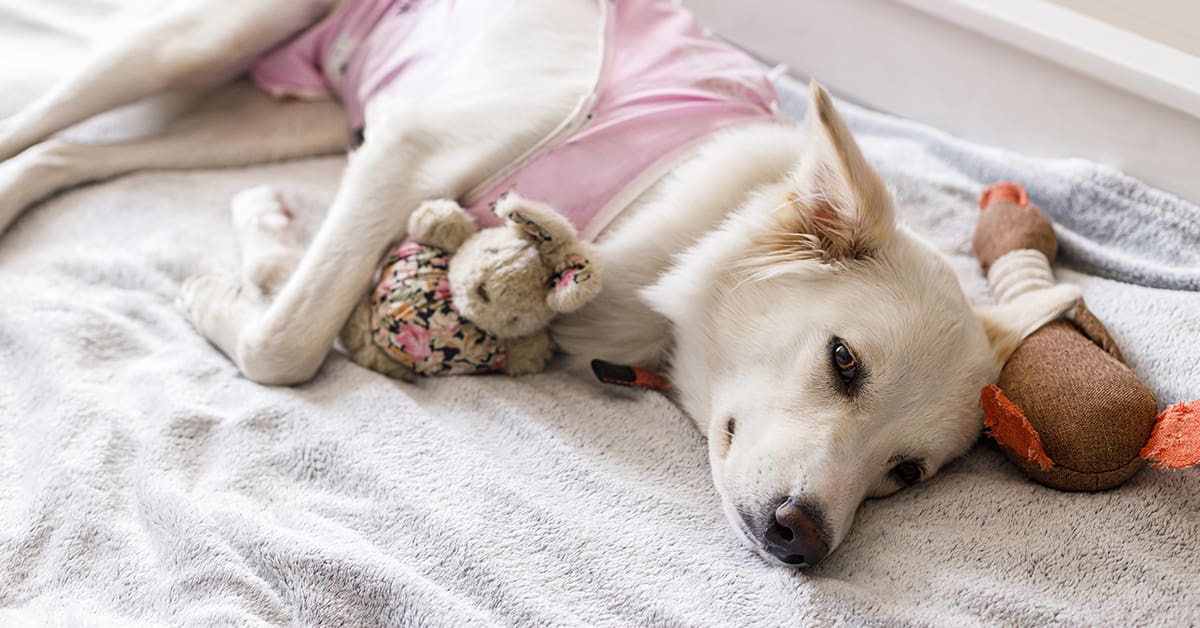
Mild redness and slight swelling along the incision line are expected during the first few days, along with a small amount of bruising, especially in light-skinned dogs. Most dogs return to their usual energy level within two or three days, which can be tricky, since the incision still needs time to heal underneath. Your veterinarian will give you specific discharge instructions covering activity limits, the use of a recovery cone or surgical suit, and any prescribed medication. Following those instructions closely is the best way to support a smooth recovery.
Why Recognizing Problems Early Matters
Complications after a spay are uncommon, but when they happen, early attention makes a real difference. Being familiar with the warning signs after spaying a dog lets you call your veterinary team at the first hint of trouble rather than waiting until a small issue becomes a serious one.
Incision Warning Signs After Spaying a Dog
The incision is the easiest place to monitor during recovery. Checking it once or twice a day, without touching or cleaning it unless your veterinarian instructs you to, gives you a clear picture of how healing is progressing.
What a Healthy Incision Looks Like
A healing incision should have edges that stay closed and lined up neatly. The skin around it may look slightly pink at first, then gradually fade over the following days. Any stitches, staples, or skin glue should remain in place, and the area should stay mostly dry.
Signs the Incision Needs Attention
Contact your veterinarian promptly if you notice any of these incision-related warning signs after spaying a dog:
- Redness or swelling that grows worse after the first two or three days
- Yellow, green, or cloudy discharge, or a foul smell
- Active bleeding or blood that continues to seep
- Edges that pull apart, gape, or show tissue underneath
- Missing sutures or staples
- A firm or soft lump that appears suddenly near the incision
- Skin that feels noticeably hot to the touch
Licking and Chewing
One of the most common causes of incision trouble is your dog’s own tongue. Licking introduces bacteria and can loosen sutures within minutes. If your dog manages to reach the incision despite a cone or recovery suit, call your veterinarian to discuss other options rather than waiting to see what happens.
Whole-Body Warning Signs After Spaying a Dog
Not every complication shows up at the incision. Some of the most serious warning signs after spaying a dog involve your pet’s overall behavior and body condition.
Symptoms That Need Immediate Care
Call your veterinarian or an emergency animal hospital right away if your dog shows any of the following:
- Pale, white, or gray gums, which may indicate internal bleeding
- A swollen, firm, or painful belly
- Weakness, collapse, or difficulty standing
- Rapid or labored breathing
- Vomiting more than once, or vomiting that continues after the first day
- Refusing food for more than 24 hours after coming home
- Not urinating within 24 hours, or straining to urinate
- Diarrhea, especially if it’s bloody
Pain and Behavior Changes
Dogs often hide pain, so subtle behavior changes deserve attention. Watch for trembling, hiding, a hunched posture, reluctance to lie down, panting while resting, or growling when touched near the belly. A dog who seems to grow more uncomfortable after the second or third day, rather than steadily improving, needs a veterinary check. Never give human pain relievers, since many are toxic to dogs and can cause serious stomach and kidney problems.
Lethargy Beyond the First Day
Grogginess on the first night is normal. Continued sluggishness, disinterest in favorite activities, or a dog who seems “off” after 48 hours may signal infection, pain, or internal complications. Trust your instincts and call your veterinarian if something doesn’t seem right.
Why Follow-Up Visits and Activity Limits Matter
Even dogs who seem completely recovered benefit from veterinary follow-up. These visits and restrictions play a big role in preventing complications altogether.
The Recheck Appointment
During this visit, your vet examines the incision, removes non-dissolvable sutures or staples if needed, and confirms that healing is on track. This is also a great time to ask questions about returning to normal walks, play, bathing, and grooming. If you noticed any of the warning signs after spaying a dog at home, even ones that resolved, mention them here so your veterinarian can take a closer look and note them in your dog’s record.
The Role of Activity Restrictions
Running, jumping, rough play, and stairs can strain internal stitches and lead to swelling, fluid pockets called seromas, or even hernias. Your veterinarian will outline exactly how long to limit your dog’s activity. Puppies and high-energy breeds often find these restrictions frustrating, so ask your veterinary team about calm enrichment ideas that fit within your dog’s recovery plan.
When in Doubt, Call
Veterinary teams would much rather hear from you about a minor concern than learn about a complication too late. Sending a photo of the incision or describing your dog’s behavior can help your veterinarian decide whether your pet needs to be seen. Paying close attention to the warning signs after spaying a dog and staying in touch with your veterinary team gives your pet the strongest chance of an uneventful recovery.
Spay Surgery and Recovery Support in Hinsdale and Elmhurst
Most dogs sail through spay recovery with nothing more than a day or two of sleepiness and a couple of weeks of restricted activity. Still, knowing the warning signs after spaying a dog helps you respond quickly if the incision changes, your dog stops eating, or her energy fades instead of improving. Early action is the key to resolving most complications quickly and safely.
If your dog is scheduled for a spay or you have concerns during her recovery, Lane Veterinary is ready to help pet families throughout Hinsdale and Elmhurst, IL and the surrounding area. Our team provides careful surgical care, and clear go-home instructions. If you notice any warning signs after spaying a dog, or simply have a question, reach out to Lane Veterinary for guidance and peace of mind. Call us at (630) 320-6644 (Hinsdale) and (630) 478-0222 (Elmhurst) or book an appointment online.
Recent Posts
About Us
Choosing a vet means entrusting your pet’s care and well-being to capable hands. Lane Veterinary strives to be a lifetime vet for you and your family, being the people you can always lean on for support and guidance. As a privately owned practice, we stand to give people and their pets the one-on-one care and attention they deserve in a calm and comfortable setting.